


Portal · Self-service
Customers orderthemselves.
Customers log in, see your catalog at their prices with live supplier availability, and order in minutes. The routing happens without anyone touching the order.
Solutions · For Dropshipping
B2B Point turns supplier catalogs into your own branded B2B store: their live stock and cost prices come in automatically, your margins and price lists go on top, and confirmed orders route straight to the supplier who ships direct to your customer. You keep the brand, the margin and the customer relationship, without touching a box.
Selling without stock sounds simple until you're doing it: supplier price files in five formats, stock levels that were true yesterday, orders forwarded by email and confirmed by nobody. One oversold item or one order that sat in an inbox over the weekend, and it's your reputation on the line, not the supplier's.
B2B Point automates the whole chain: supplier catalogs and live stock feed in continuously, your margin rules price everything automatically, and a confirmed order routes to the right supplier in seconds, with tracking and invoices flowing back under your brand. Your customers never see the supplier; your team never re-types an order.
The dropship flow
The customer orders once. Behind the scenes, B2B Point prices, routes, splits and tracks, and everything lands in the same clean order stream.
Portal · Self-service
Customers log in, see your catalog at their prices with live supplier availability, and order in minutes. The routing happens without anyone touching the order.
Routing · Your rules
Routing priorities are your call, per product, per category or per customer. When a supplier is out, the order falls through to the next rule automatically.
PIM · Feeds
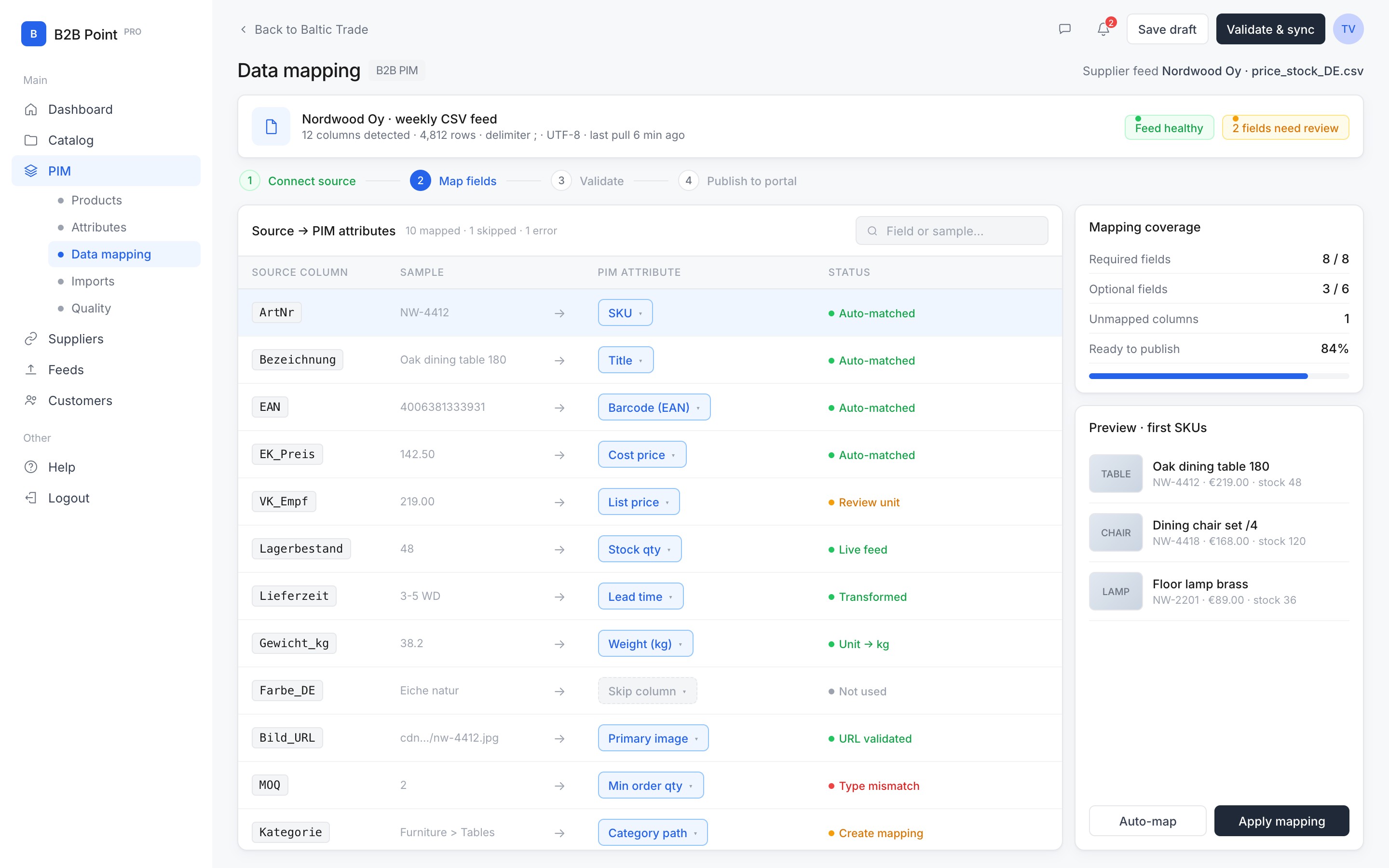
Manufacturer feeds, importer price lists, CSV, XML and API sources map into one PIM catalog, with your margins, your names and your stock levels.
What you get
Add a supplier and your catalog grows by a thousand SKUs overnight, with no inventory risk, no extra headcount, and margins protected by rules instead of vigilance.
Supplier feeds, automatic order routing, margin rules and white-label fulfilment are first-class features, not workarounds bolted onto a consumer webshop.
Catalogs, cost prices and stock sync continuously from suppliers via API, EDI, CSV or XML. When a supplier runs out, the item shows it instantly, so overselling stops being a business model risk.
A confirmed order reaches the right supplier in seconds, by your rules: preferred supplier, best cost, closest warehouse or whoever has stock. No inbox, no forwarding, no Monday backlog.
Set markups per supplier, category or customer group. When a supplier changes cost prices overnight, your sell prices recalculate automatically, and your margin floor is never breached.
One customer order can span three suppliers. The platform splits it behind the scenes, tracks each shipment separately and presents the customer one order, one confirmation, one invoice.
Customers order in your portal, at your prices, and get confirmations, tracking and invoices with your name on them. Suppliers stay invisible. The customer relationship stays yours.
Stock your fast movers, dropship the long tail. Per product you choose the fulfilment path, and accounting, tracking and stock sync stay consistent across both, in one ERP-connected flow.
A supplier who only emails Excel files, custom routing priorities, branded packing slips, marketplace channels on top of the portal. We analyse how your dropship chain runs and build the missing piece. You don't change your process to fit the software; the software is fitted to you.
Most dropship sellers launch with their first suppliers in about three weeks, with our onboarding team connecting and validating the feeds alongside yours.
Get a Quote →We hook up each supplier's catalog, cost prices and stock, via API, EDI, CSV, XML or a portal export, and merge everything into one clean catalog with your product names and categories.
Markups per supplier, category and customer group; routing priorities like preferred supplier, best cost or fastest shipping; credit limits and net terms, configured to match how you sell, not a template.
Each account logs into your branded portal and sees the full catalog at their prices, with live availability. No hint of which supplier is behind which product.
Confirmed orders route to the right supplier automatically; tracking numbers and shipping confirmations flow back to the customer under your brand, and invoices sync to your accounting. You handle exceptions. The platform handles the rest.
True power of the dual system
Buyers shop a branded front. Feeds, PIM, margins, routing and ERP stay in B2B Point. Change once. Every channel stays honest.
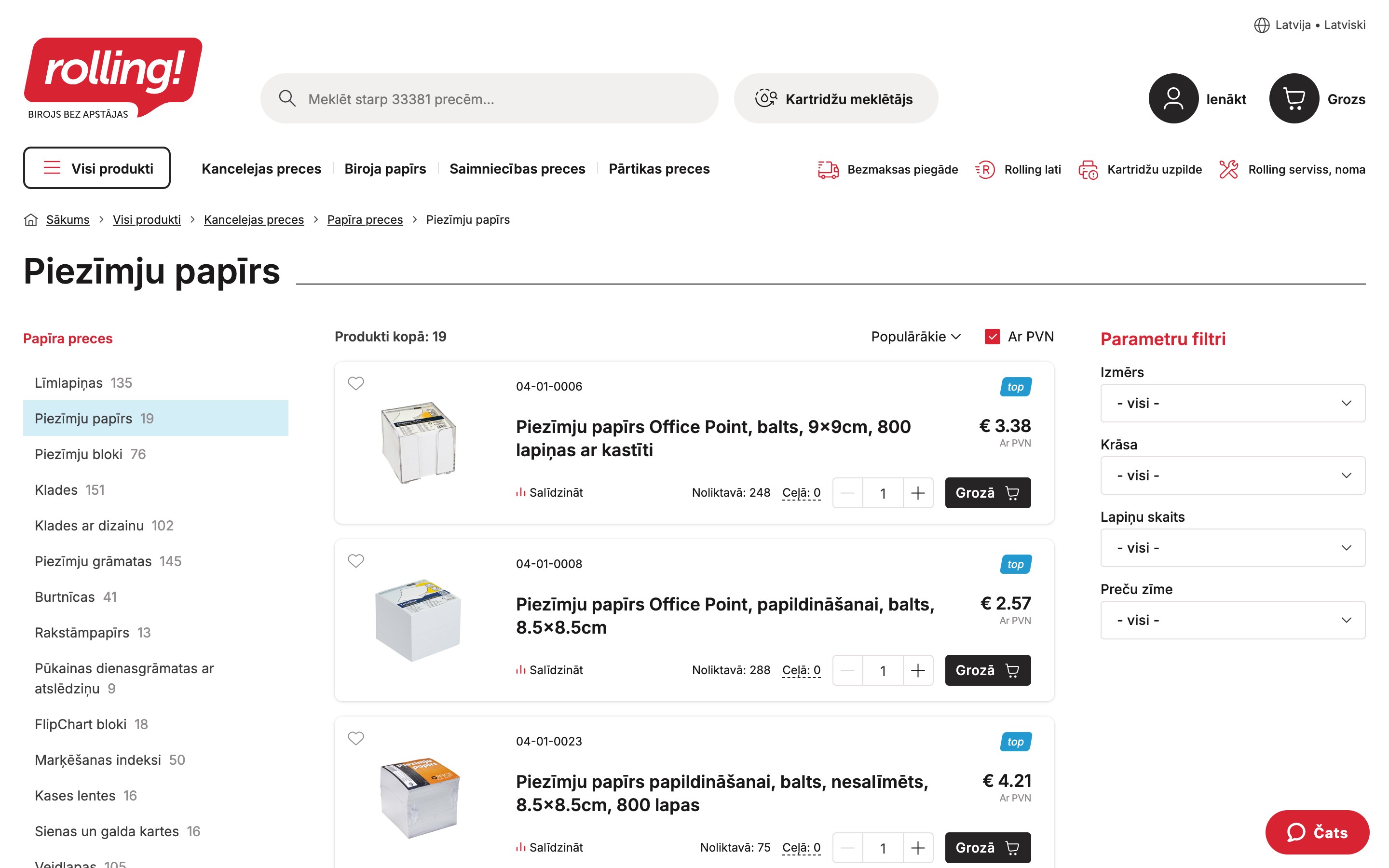
Dropship sellers usually need the portal plus the systems around it. Connect feeds and ERP, sell on a storefront, or hand distributors a cleaner channel.
“We went from 800 stocked SKUs to 9,000 sellable ones in one quarter, without renting a single square metre of warehouse. Orders route to suppliers on their own; we just watch the margin report.”
Teams who moved from price files and email forwarding to automated dropship routing.

“Bars and shops reorder on their phones now. Our reps finally sell instead of re-typing orders from voicemail.”

“Price lists, stock and invoices used to live in five spreadsheets. Now it's one portal, and zero Monday-morning corrections.”

“Contract pricing per account was the blocker. B2B Point handled it out of the box, synced live with NetSuite.”
“Supplier feeds land in PIM, our margins sit on top, and buyers never see who ships. We grew the catalog without growing the warehouse.”
Industries
Long-tail spare parts, seasonal collections, oversized furniture shipped direct from the maker. Dropship rules per category and supplier are built in.
Don’t see yours?. The rules engine adapts to any product logic.
Supplier stock levels sync continuously, from real-time API feeds down to scheduled file imports. You can add safety buffers per supplier (show out of stock when fewer than 5 remain), and less reliable feeds can be dampened more aggressively. If an order still slips through, it's held as an exception for your team instead of silently failing at the supplier.
No. The portal, confirmations, tracking notifications and invoices all carry your brand and your prices. Suppliers receive only what they need to ship. Many will even include your branded packing slip. The customer relationship, and the data behind it, stays entirely yours.
The platform splits it automatically: each supplier gets their part, each shipment is tracked separately, and the customer still sees one order with one confirmation and one invoice. You see the full picture, including the margin per line, in one place.
Returns are registered in the portal against the original order, and the platform knows which supplier shipped which line, so the claim routes to the right supplier with the right references. Your team decides the customer resolution; the supplier settlement is tracked separately, and credit notes sync to your accounting.
Yes. That's the most common setup. Stock your fast movers for speed and margin, dropship the long tail for range. Per product (or per rule) the platform decides the fulfilment path, and a single customer order can combine both: your warehouse ships part, suppliers ship the rest, the customer gets one clean order.
Bring one supplier's price file to a 30-minute call. We'll load it, put your margins on top and show an order routing from customer click to supplier confirmation, live.