

Stack holding the business hostage
Legacy portals, Magento 1, abandoned Woo, custom PHP. Every change needs a hero developer. Buyers feel friction. Finance feels risk.
Services · Replatform & Migration
We migrate aging B2B portals, Magento and Woo debt, and half-integrated storefronts onto a modern stack: B2B Point for wholesale logic, your ERP as system of record, and a storefront buyers will actually use. Catalog, companies, prices and SEO equity move with a plan, not a prayer.
Most wholesale teams are not chasing a shiny storefront. They are stuck with tech debt, stalled systems, cutover fear and a desk that still is the glue. This page is about the third option: engineered cutover.
Legacy portals, Magento 1, abandoned Woo, custom PHP. Every change needs a hero developer. Buyers feel friction. Finance feels risk.
Finance or warehouse moved on. The B2B front still speaks yesterday's model. Orders, prices and customers disagree daily.
Catalog, contract prices, history and SEO feel too costly to move. The old system stays. The desk pays interest every week.
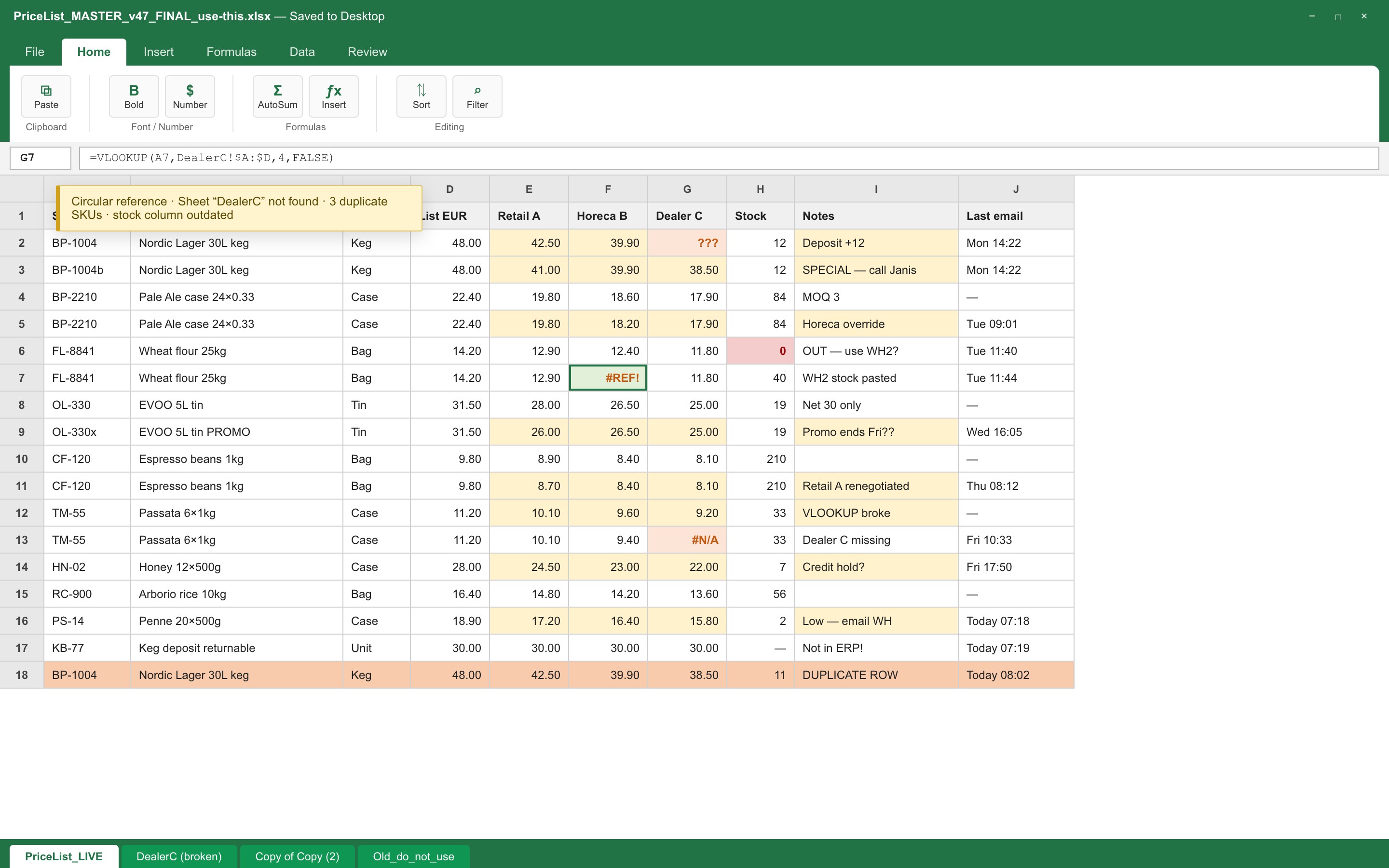
Retyping orders, chasing stock, emailing price lists. People paper over gaps the software should close, and that cost never shows on a license invoice.
A replatform is a data and operations project with a storefront attached. We migrate the commercial core first, then the experience buyers see.
SKUs, variants, packs, attributes and assets cleaned in PIM, then published to the new storefront without months of retyping.
Customer groups, locations, contacts and login history mapped into B2B Point company accounts so trade buyers pick up where they left off.
Contract prices, volume tiers, MOQs, net terms and credit limits become the source of truth in B2B Point, not a spreadsheet next to the old shop.
Open orders, reorder patterns and enough history for support and finance to stay continuous through cutover.
Customers, stock and orders rewired through B2B Point so the new front talks cleanly to the systems you already trust.
URL maps, redirects and content migration planned so organic demand does not vanish the Monday after go-live.
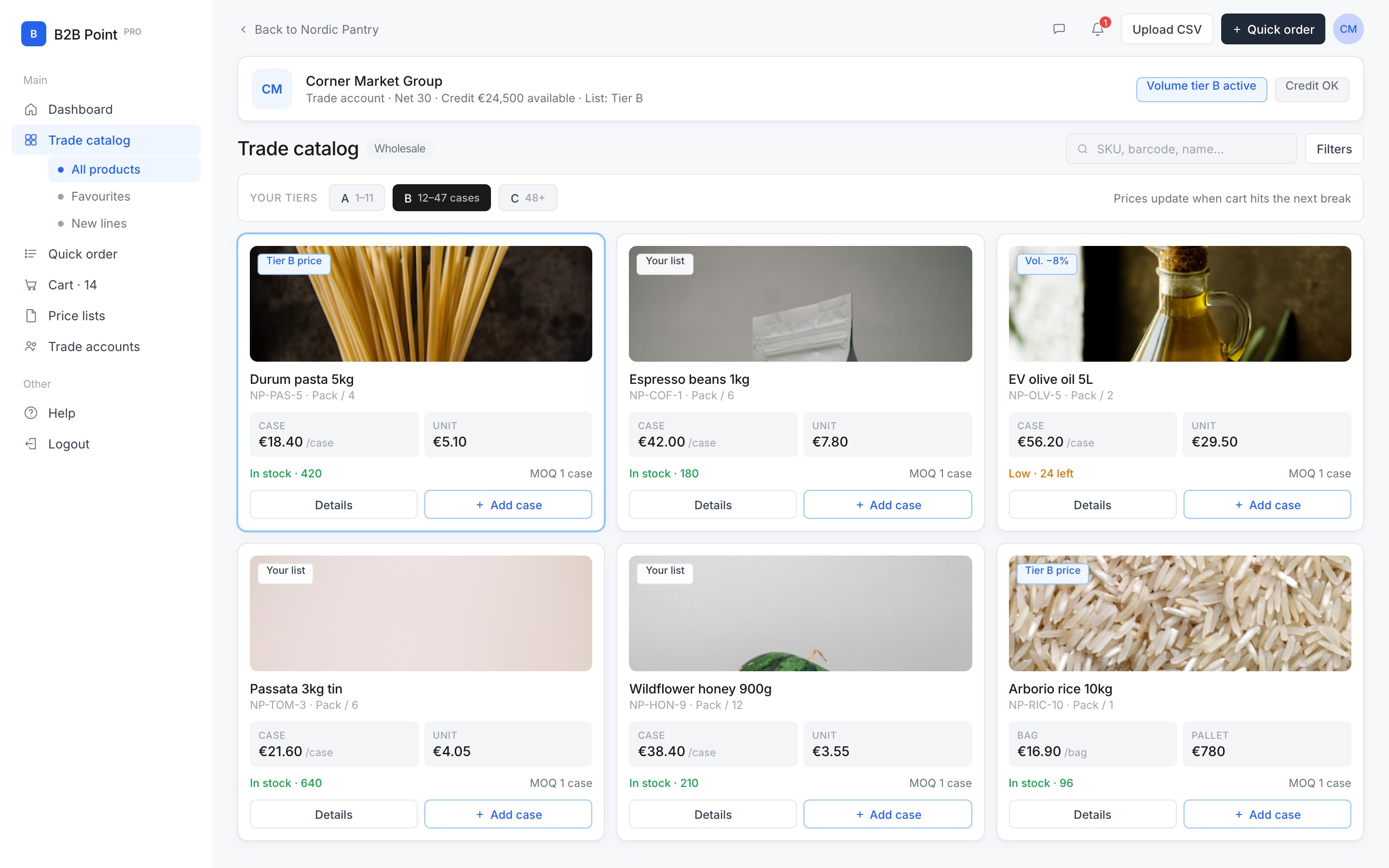
Drag the slider. Same wholesale job: price lists, account exceptions and stock notes in Excel versus a live trade catalog wired to your ERP.
Exit Magento, rescue Woo, upgrade Shopify into real B2B, or retire a custom portal. Same method: audit, blueprint, engine, cutover.
Legacy portal · Custom PHP
Aging trade portals and custom PHP shops become a branded storefront with B2B Point as the wholesale brain. Finance stays where it already works.
→ Shopify or Woo + B2B Point + ERP
Magento 1 · Magento 2 debt
Multi-store catalogs, company accounts and credit move into B2B Point. Rebuild the front only where Magento stopped earning its keep.
→ Adobe kept, or Shopify / Woo
WooCommerce plugin debt
Pull catalog and customers out of the plugin pile. Custom modules, B2B Point and PIM, tuned for manufacturer-scale catalogs.
→ Hardened Woo + B2B Point + PIM
Shopify without real B2B
Buyers keep the Shopify they know. Plus B2B, private apps and B2B Point add contract pricing, credit and ERP sync underneath.
→ Shopify / Plus + B2B Point
Catalog, customers, price logic, integrations, SEO and the real workarounds the desk uses. We map what must move, what can die, and what ERP already owns.
Paid fixed-scope plan: target stack, data map, parallel-run design, cutover and rollback. Estimate before build — see Blueprint for what you receive.
B2B Point and integrations stand up against live logic. Storefront and modules build on truth, not mock data.
Pilot accounts, dual-write where needed, then cutover with redirects, support playbook and the same team on the other side of go-live.
Straight answers before you book a migration architecture session.
Usually no. Most replatforms keep the ERP as master for stock, customers and financials. B2B Point becomes the wholesale commerce layer; the storefront becomes the buyer experience. We upgrade the middle that is failing, not the ledger that is fine.
No, that is the point of a migration plan. We define what history moves, what stays archived, and how open orders and contract prices behave on day one. Cutover is designed around revenue continuity.
Often yes. Many projects are systems upgrades: keep the channel, replace the broken B2B logic and integrations with B2B Point. Full storefront rebuilds happen when the theme or platform itself is the bottleneck.
Focused Shopify or Woo migrations with clean data can be weeks. Magento exits, large manufacturer catalogs or heavy ERP mapping are measured in months with staged milestones. You get a blueprint and estimate before build starts.
Rescues are common. We audit what is salvageable, stabilize production, then migrate the commercial core into a stack one team can own.
URL inventory, redirect maps, content parity checks and post-launch monitoring. Category and product equity is treated as an asset in the blueprint, not an afterthought.
A free architecture session: what to keep, what to migrate, ERP fit, storefront recommendation and a fixed-scope migration outline.